

Table of Contents
- The Billing Choice Is Bigger Than It Looks
- What the Major CRM Platforms Charge
- When Annual Billing Makes Sense
- When Monthly Billing Is Worth the Premium
- The Costs the Pricing Page Leaves Out
- A Simple Way to Decide
- What to Know Before Signing With Each Platform
- Frequently Asked Questions
- The Straight Answer
There is a moment in almost every CRM purchase when the decision suddenly looks smaller than it is.
You have done the research. You have chosen the platform. You are ready to sign.
Then the pricing page makes its move:
Commit to a full year and save 20%, 30%, or sometimes even more.
Annual billing starts to feel obvious.
Sometimes it is.
Sometimes it locks you into a platform your team is not ready for. Or a seat count that changes three months later. Or a setup that looked perfect in the demo and falls apart in daily use.
Pricing pages tend to skip that part.
Annual vs monthly CRM plans are more than a billing choice.
You are choosing how much flexibility to give up and whether the discount is worth it.
The cheaper option on paper does not always win in practice.
Let’s break down the real numbers, trade-offs, and cleanest way to decide.
1. The Billing Choice Is Bigger Than It Looks
Choose annual too early and you may spend six months paying for a CRM your team barely uses.
Choose monthly after the platform has already proved its value, and you could leave 20–40% of your CRM budget on the table each year.
Neither mistake looks dramatic at first.
Over two or three years, across a growing team, it becomes a serious line item.
The decision gets easier once you stop asking which option is cheaper.
Ask whether the business is ready to commit.
That answer tells you far more.
2. What the Major CRM Platforms Charge
Annual discounts vary widely by platform.
And “save 20%” sounds very different once you turn it into actual money.
Pipedrive
Pipedrive offers annual savings of up to 42%, depending on the plan.
Monthly pricing is:
- Lite: $24 per user
- Growth: $49 per user
- Premium: $79 per user
- Ultimate: $99 per user
With annual billing, the monthly equivalent drops to:
- Lite: $14 per user
- Growth: $39 per user
- Premium: $59 per user
- Ultimate: $79 per user
For a ten-person team on Growth, annual billing saves $1,200 each year.
That is no longer a small billing preference.
It is budget you can use elsewhere.
And the larger the team, the more significant the annual saving becomes.
Zoho CRM
Zoho CRM saves around 20–34% with annual billing.
Standard drops from $20 to $14 per user per month. That saves $72 per user each year.
Professional drops from $35 to $23. That saves $144 per user each year—or $1,440 for a ten-person team.
Enterprise saves $120 per user each year.
Zoho’s annual savings are not always as dramatic as Pipedrive’s largest discount.
They are steady, meaningful, and especially useful for teams watching software costs closely.
HubSpot
HubSpot makes the billing conversation more complicated.
Monthly billing is available at Starter.
At Professional and Enterprise, annual commitment is essentially part of the model.
Marketing Hub Professional starts at $880 per month with three Core Seats included. A one-time $3,000 onboarding fee is also required.
If you need HubSpot’s complete AI suite, advanced automation, predictive features, or Professional-level functionality, flexibility may not be available at the tier you need.
Know that before building a budget around a monthly option that disappears once the feature requirements grow up.
GoHighLevel
GoHighLevel saves around 17% across its annual plans.
Starter costs $97 per month or $970 per year.
That brings the annual monthly equivalent to around $81.
Unlimited costs $297 per month or $2,970 per year.
The annual monthly equivalent is around $248.
The discount is consistent and easy to understand.
GoHighLevel also uses flat-rate pricing rather than a per-seat model.
You are comparing one platform fee—not multiplying every difference across the team.
Brevo and Klaviyo
Brevo and Klaviyo both offer around 10% annual savings.
That is modest next to Pipedrive or Zoho.
At higher sending volumes, it still deserves attention.
Brevo Professional can save around $600 per year with annual billing.
Not a budget revolution. But still real money.
Salesforce
Salesforce generally expects an annual commitment at most meaningful tiers.
Enterprise and above typically require a 12-month term.
The bigger cost question often sits above the subscription.
You also need to model AI consumption, Flex Credits, and conversation pricing.
The billing cycle is only one part of the Salesforce invoice.
3. When Annual Billing Makes Sense
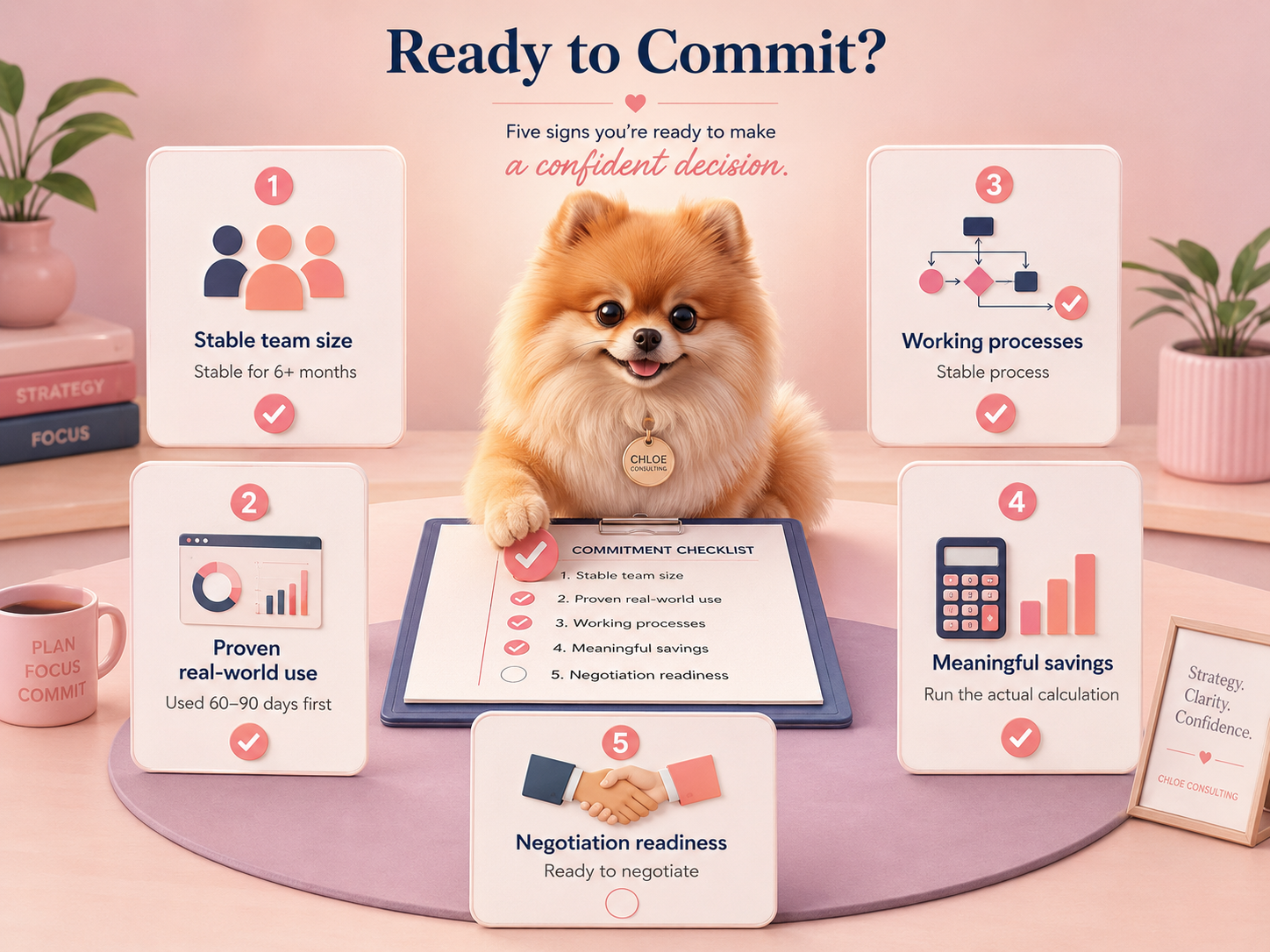
Annual billing works when the business is ready.
The discount alone is not enough.
Your Team Size Is Stable
One of the biggest annual billing risks is paying for seats you no longer need.
You can also lock in today’s headcount and discover three months later that the team has changed completely.
Annual billing becomes safer when team size has been stable for at least six months and no major changes are expected.
Stable team. Stable process. Proven platform.
Now the commitment has something solid underneath it.
You Have Used the Platform Properly
The worst time to commit annually is the day you sign up.
You do not yet know how the team will use the CRM.
Demos cannot show you that.
Real usage can.
Use the platform for 60–90 days first.
Watch which features become essential. Notice what gets ignored. Test whether the CRM still fits once the demo shine wears off.
Then move to annual billing with evidence.
The Savings Are Meaningful for Your Budget
Run the actual calculation.
Do not stop at “save 30%.”
A ten-person team on Pipedrive Growth saves $1,200 per year.
A five-person team on Zoho Professional saves $720.
Those numbers land differently depending on cash flow, runway, and current priorities.
A discount earns its place when the saving can do something useful for the business.
Put it in the spreadsheet.
Make the number prove itself.
You Are Ready to Negotiate
An annual commitment gives you leverage.
Most buyers leave it unused.
The listed annual price is a starting point, especially for larger teams or multi-year terms.
Buyers who bring credible alternatives and commit to annual or multi-year contracts can often secure 15–25% below list price on platforms such as HubSpot and Salesforce.
Ask before signing.
That conversation can be worth more than the automatic annual discount.
The Features You Need Require Annual Commitment
Sometimes the platform makes the decision.
HubSpot Professional and Enterprise, along with many Salesforce tiers above Pro Suite, are built around annual commitment.
If the required features live there, annual billing becomes part of the cost of doing business.
Budget the full picture.
Subscription is one line.
Onboarding is another.
AI usage may be another.
The checkout total rarely tells the whole first-year story.
4. When Monthly Billing Is Worth the Premium
Monthly billing often gets treated as the expensive, indecisive option.
Sometimes it is the smartest money you spend.
Flexibility has value.
You Are in the First 90 Days
The first few months reveal what the demo could not.
-
Maybe the workflows do not fit.
-
Maybe the integrations create more work than expected.
-
Maybe the team avoids the platform.
-
Maybe the “must-have” feature turns out to be decorative.
Pay monthly while you learn.
After 60–90 days of real usage, you can commit with actual confidence.
The premium acts as insurance against the wrong annual contract.
Your Team Size Is Changing Quickly
Hiring, restructuring, and unpredictable growth can make annual contracts awkward.
Adding seats mid-contract may bring prorated charges or different pricing.
Removing seats rarely brings money back.
Monthly billing gives you cleaner control while headcount is moving.
You pay more each month.
You avoid funding seats for a team that no longer exists.
Your Business Is Seasonal or Project-Based
Agencies, event businesses, seasonal retailers, and project-heavy teams may not need the same CRM capacity all year.
When usage rises and falls, monthly billing can follow reality more closely.
Annual billing rewards stability. Monthly billing protects flexibility.
Choose the advantage your business can actually use.
You Are Evaluating a Switch
Do not sign another annual contract with a CRM you already plan to leave.
Renewal pressure has trapped plenty of teams for one more expensive year.
Stay monthly while evaluating alternatives.
You keep a clean exit when the replacement is ready.
Cash Flow Is Tight
Annual billing usually means paying upfront or in larger chunks.
For an early-stage company, that can pull cash away from hiring, marketing, product, or operations.
Yes, monthly billing costs more across the year.
But preserving cash flow can still be the better financial decision.
The pricing page does not run your business.
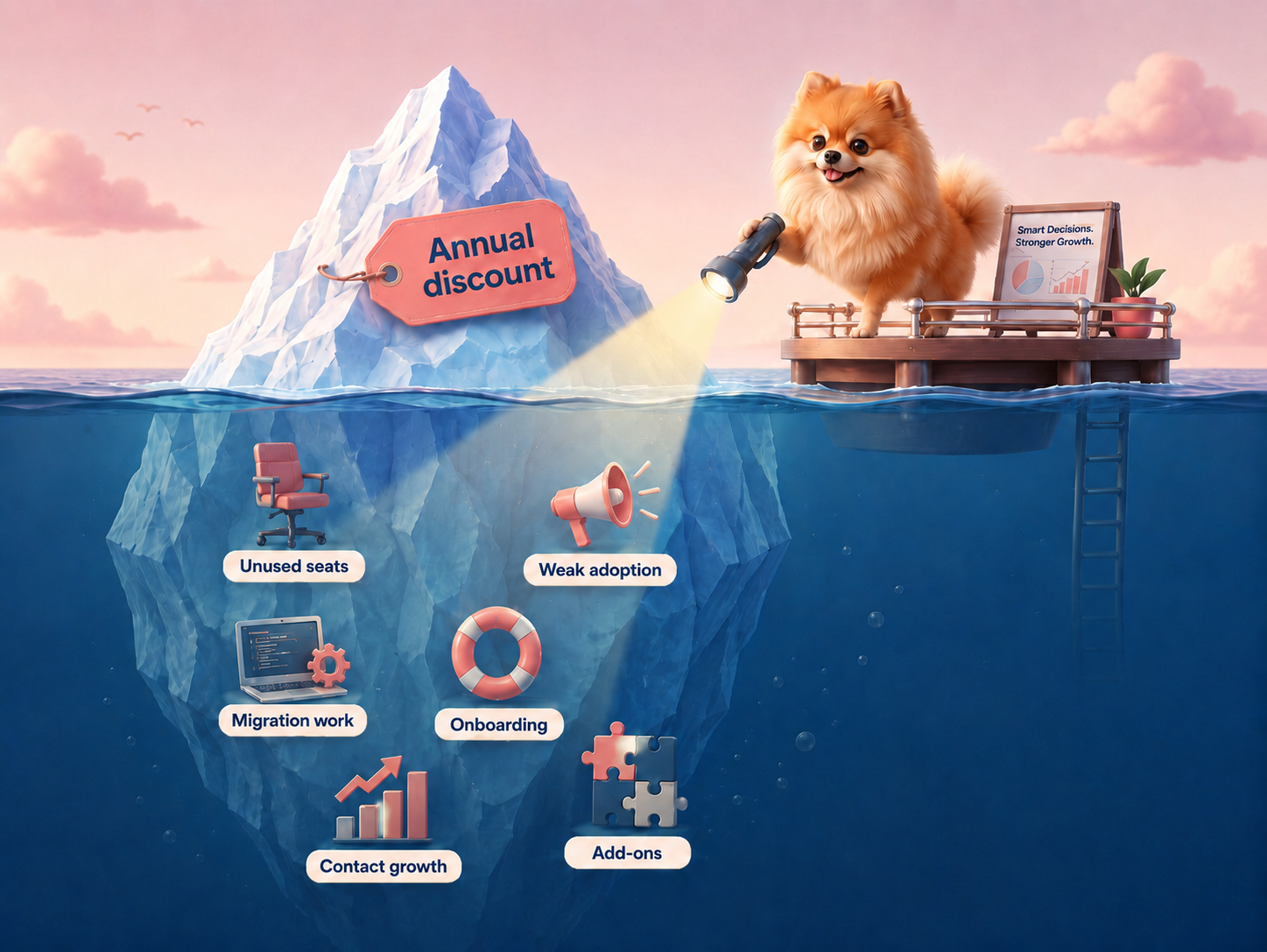
5. The Costs the Pricing Page Leaves Out
Most annual vs monthly CRM comparisons focus on the discount.
The hidden costs can be much larger.
Switching Costs Are Bigger Than They Look
The cost of a bad annual commitment extends beyond the remaining subscription.
It includes:
- Data exports
- Workflow rebuilding
- Integration cleanup
- Team retraining
- Lost productivity
- Messy historical activity
That work can cost more than the annual discount ever saved.
Validating the platform before committing usually pays for itself.
Mid-Year Headcount Changes Can Eat the Savings
Adding users mid-contract is usually easy.
Getting money back for removed users is not.
Most platforms will gladly add seats and bill for them.
Very few refund unused seats when the team gets smaller.
If headcount is unpredictable, annual billing can become less efficient than it looked on day one.
Onboarding Fees Still Apply
HubSpot onboarding fees often range from $1,500 to $3,000, depending on the product and tier.
They apply regardless of the billing cycle.
Monthly or annual, the cost still lands.
Do not calculate the first year from subscription discounts alone.
The setup fee can change the entire equation.
Utilization Matters More Than Billing
The most expensive CRM is not always the one with the highest subscription price.
It is the one your team uses at 20% while paying for 100%.
A simpler CRM used consistently will do more than an advanced platform everyone avoids.
A discount can make the wrong CRM look well trained.
Daily use exposes the fit fast.
STILL CHOOSING THE PLATFORM?
The billing cycle only matters after the CRM fit is clear. Bring Chloe your processes, team structure, and shortlist. We will narrow the options and show you what each platform needs to prove before you commit.
6. A Simple Way to Decide
Here is the clean version.
Less Than 90 Days on the Platform?
Stay monthly.
Validate the fit first.
Revisit annual billing when you have real usage data.
Used It for Six Months or More—and Happy?
Calculate the annual saving for your exact team size.
If the saving is larger than the realistic cost of switching, annual billing is probably the stronger financial choice.
A useful switching-cost estimate is usually three to six months of subscription.
Team Growing Quickly?
Stay monthly until headcount stabilizes.
Then negotiate an annual rate around the likely team size over the next 12 months.
Do not build a contract around today’s number when next quarter looks very different.
Required Features Live on Annual Plans?
Accept the model.
Then negotiate the rate.
Keep onboarding fees separate in the budget.
Blending subscription and setup costs only makes the first-year math harder to trust.
Actively Considering a Switch?
Use the new platform monthly for at least 60 days.
Commit only when the team has proved the fit.
The monthly premium is cheap next to another year in the wrong CRM.
7. What to Know Before Signing With Each Platform
Pipedrive
Pipedrive offers annual savings of up to 42%.
If your team has used it for more than 60 days and the seat count is stable, annual billing can become the stronger financial choice.
The savings increase with team size.
Higher tiers can make the difference more meaningful.
Zoho CRM
Zoho’s 20–34% annual discount is solid.
Its flexible monthly contracts also make a start-monthly-then-switch approach easier.
Professional offers the largest per-user saving.
If your users sit across mixed tiers, consider annual billing there first.
HubSpot
Starter gives you a useful monthly validation window.
Professional and Enterprise are structured around annual commitment.
Budget for that from the beginning.
Keep mandatory onboarding on its own line—not tucked into the subscription as an afterthought.
GoHighLevel
GoHighLevel saves around 17% annually.
The flat-rate model makes the calculation simpler than it is with seat-based CRMs.
Use the first monthly cycle to confirm the sub-account structure.
Move annual once the setup has proved itself.
Salesforce
Salesforce is annual-first at most meaningful tiers.
The more important question is what sits above the base subscription:
- Flex Credits
- Conversation pricing
- Expected AI usage
Model those costs before signing.
Leave room while the team’s usage patterns settle.
Klaviyo and Brevo
Klaviyo and Brevo offer smaller annual savings of around 10%.
At high sending volumes, the difference still adds up.
The larger decision is often the contact or email tier.
Start slightly below the volume you expect to need.
Upgrade when the limits require it.
Overprovisioning on day one often costs more than moving up later.
8. Frequently Asked Questions
Is annual CRM billing always cheaper than monthly?
On a per-month basis, yes.
Across platforms that offer both options, annual savings range from around 10% on Brevo and Klaviyo to as much as 42% on current Pipedrive plans.
The saving only works if you use the platform for the full term.
Leave after six months and the annual deal may cost more than monthly billing would have.
When does monthly billing make more financial sense?
Monthly billing makes sense during the first 60–90 days on a new platform.
It also works better when the team is changing, a switch is already under consideration, or upfront annual payment would strain cash flow.
The premium buys flexibility.
Sometimes flexibility is exactly what the business should pay for.
Can I negotiate annual CRM pricing?
Yes.
More than most buyers realize.
Annual and multi-year commitments create leverage, especially when you bring real competitor quotes.
Buyers who reference credible alternatives and commit to longer terms can often secure 15–25% below listed rates on platforms such as HubSpot and Salesforce.
Annual billing is more than a checkout option.
It is a negotiation moment.
What happens if I add team members mid-contract?
The answer depends on the platform.
Most vendors add users at the annual rate, prorated for the remaining contract.
GoHighLevel is different because its flat-rate model includes unlimited users within the plan.
Before signing, ask exactly how mid-cycle additions are priced.
That question can prevent a messy surprise later.
Should I start monthly and switch to annual later?
For most businesses, yes.
Start monthly and test the platform against real workflows.
Move annual once the team uses it consistently and the fit is clear.
Many platforms allow a switch to annual mid-cycle.
You may not need to wait a full year to capture the saving.
9. The Straight Answer
Annual vs monthly CRM plans have a clearer answer than most software decisions.
If the team is stable, the platform fits, and the saving is meaningful, annual billing is usually the smarter move.
The annual difference can be substantial.
Pipedrive offers up to 42% off with annual billing. Zoho reaches up to 34%.
As the team grows, so does the value of that discount.
But if you are still in the first 90 days, headcount is moving, or the platform has not earned your confidence, stay monthly.
The premium is real. So is the protection.
A poor annual commitment costs more than the subscription.
It takes time, migration effort, team trust, and momentum.
None of that appears on the pricing page.
Get the platform right first. Then decide how long it has earned the right to stay.
BEFORE YOU LOCK IN THE RATE, CHECK WHAT ELSE YOU’RE LOCKING IN.
Tell us which CRM you’re considering, how many people will use it, and what the contract includes. We’ll help you work out whether the annual savings are worth the commitment.
TALK TO CHLOE BEFORE YOU COMMIT